
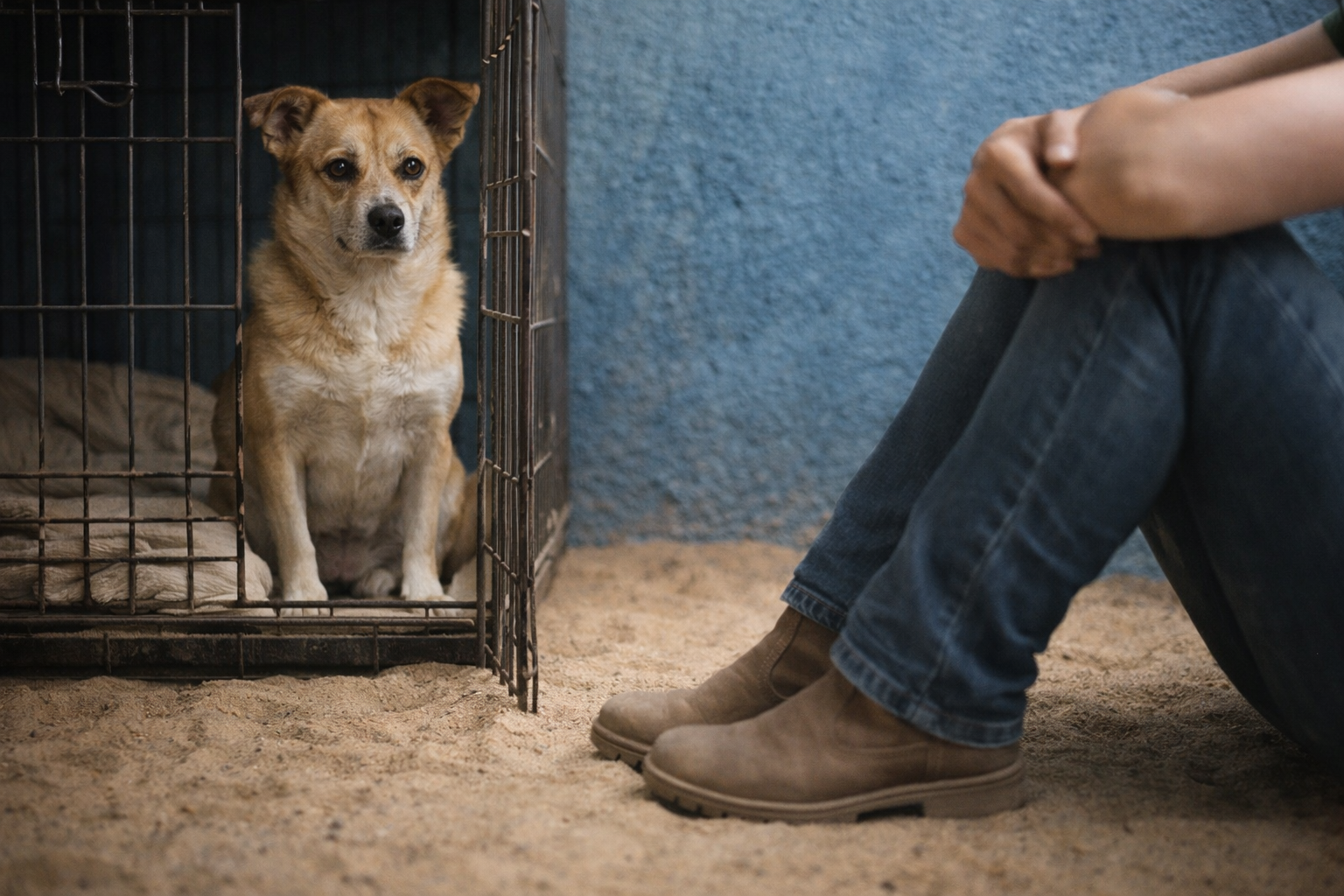
When dogs arrive here from the street — or from whatever situation they were surviving before — they don’t come in wagging, hopeful, or ready to make friends. That version of the story is comforting, but it’s rarely true.
They come in tired.
Weary.
Unsure.
Often filthy. Sometimes covered in parasites. Sometimes nursing injuries you can’t see yet. Almost always bracing for the next bad thing, because that’s what life has taught them to expect.
So we don’t rush them.
There’s a lot of pressure in rescue to do something immediately. To interact, to assess, to “bring them out of their shell,” to make progress visible as fast as possible. But the first thing most dogs need isn’t stimulation or affection. It’s permission to stop.
The first few days usually look very simple. A crate. A blanket. Fresh water. Food nearby. No forced interaction. No expectations. No performances. Just space.
They sleep. A lot.
Not light naps — deep, heavy sleep. The kind that only comes when a body finally feels safe enough to let go. Sleep that looks almost alarming if you’re not used to it, because it’s so still. Like they’re making up for weeks, months, sometimes years of never truly resting.
Some dogs eat right away. Some take their time. Some wait until the room is quiet and no one is watching. Most just observe.
They watch us walk by.
They watch the routines.
They watch other dogs come and go.
They watch hands move, voices talk, doors open and close.
They’re collecting information. Slowly, carefully, deciding if this place is safe — or if it’s just another stop they shouldn’t trust yet.
And then, almost without you noticing at first, things begin to shift.
They start stretching out instead of curling themselves into tight little knots.
They sigh when they lie down.
They choose a blanket instead of hovering above the floor.
They wake up cleaner, less itchy, less uncomfortable.
They move differently, because their bodies don’t hurt in the same way anymore.
They start to feel better inside their own skin.
That’s decompression.
It isn’t dramatic. It doesn’t make for great before-and-after photos. There’s no single moment you can point to and say, “There. That’s when it happened.” It’s subtle. Quiet. Easy to miss if you’re only looking for big changes.
But if you’re paying attention, it’s one of the most heartwarming processes to witness.
It’s watching a dog realize they don’t have to be “on” all the time anymore. That they don’t need to scan every sound, track every movement, prepare for impact. That nothing bad happens if they simply exist.
They learn they can rest.
They learn they can take up space.
They learn the world doesn’t end when they stop trying so hard.
Those quiet days matter more than almost anything else we do. They’re the foundation for everything that comes next — trust, healing, learning, connection. Without decompression, everything else is built on shaky ground.
And honestly, even after all this time, witnessing that light slowly come back into a dog’s eyes never gets old.